





Home > ABOUT JTSB > Message from the Chairperson
Message from the Chairperson
Our Mission to Enhance Transportation Safety
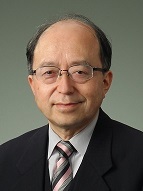 It has now been nearly one year since I was appointed as Chairperson of the Japan Transport Safety Board (JTSB). The JTSB conducts investigations regarding accidents and incidents involving aircraft, railway, and marine, and issuing recommendations aimed at preventing recurrence and mitigating damage. Over the past year, I have felt profound responsibility as head of the organization to safeguard transportation safety.
The mission of the JTSB is to “contribute to preventing the occurrence of accidents and mitigating the damage caused by them, thus improving transport safety while raising public awareness, and thereby protecting people’s lives by accomplishing appropriate accident investigations that thoroughly unveil the causes of accidents and damages incidental to them, and urging the implementation of necessary policies and measures through the issuance of safety recommendations and opinions or the provision of factual information.”
In order to achieve this mission, as soon as the JTSB receives notifications about occurrences of accidents and incidents, investigators in charge who are assigned to each of the three modes (aircraft, railway, and marine) will initiate an investigation. The investigation process begins with initial on-site investigations conducted immediately following the occurrence, followed by the accumulation of factual information and interviews with relevant parties. Through these efforts, factual information is carefully accumulated, and analysis is advanced in a comprehensive manner.
To ensure prompt and precise information accumulation, the JTSB has been enhancing its investigative and analytical capabilities through the introduction of advanced technologies, including drones and 3D scanners, etc.
Once a draft investigation report has been prepared, deliberations are undertaken within the committees of the respective mode. Through discussions among Board members, and after procedures such as opinion hearings from relevant parties, the final report is adopted. It is then submitted to the Minister of Land, Infrastructure, Transport and Tourism and made publicly available.
Through the publication of these investigation reports, the JTSB aims not only to clarify the causes of accidents and incidents and contribute to their prevention, but also to enhance the safety of transportation across all three modes.
The activities of the JTSB are not confined to the preparation of investigation reports on individual cases. Drawing upon the accumulation of past investigation results, we identify priority themes of particular significance and develop safety awareness materials, including the “JTSB Digests” and informational leaflets, with a view to preventing future accidents and incidents. In the past year, such materials have addressed the prevention of accidents in which railway workers are struck by trains, as well as the safe operation of diving vessels.
Furthermore, in cases where, during investigations, factual information is identified that may contribute to prevention of accidents and incidents, and to the mitigation of damage, such information is promptly communicated to relevant organizations and made public without awaiting the dissemination of the final report. In the past year, such information has been provided in relation to helicopter accidents and railway derailments.
In addition, as a part of our international initiatives, we are committed to strengthening global cooperation through the exchange of views and information among accident investigation authorities worldwide. This includes participation in international forums such as the International Transportation Safety Association (ITSA)’s Meeting, where leaders and experts convene to share knowledge and expertise. In the railway mode, the Railway Accident Investigation International Forum (RAIIF), established at the initiative of the JTSB, convened its first meeting in Tokyo in 2024. The second meeting was held in Taiwan last year, and the forum is to be held annually. We intend to participate in the third meeting, scheduled to be held in Singapore this year.
In recent years, unmanned aircraft, including drones, have seen increasing utilization across various fields. The JTSB has already established a robust framework for investigating accidents and serious incidents involving such aircraft and continues its efforts. At the same time, new forms of transportation are attracting growing attention. Notably, at the Osaka–Kansai Expo held last year, demonstration flights of so-called advanced air mobility, representing next-generation aerial transportation means, attracted considerable attention. With due consideration given to the need to address accidents and incidents involving such emerging technologies, the JTSB is resolutely committed to achieving the mission to further enhance transportation safety, and we would like to continue to devote our utmost efforts in the year ahead.
I sincerely appreciate your continued understanding and cooperation.
January 2026
RINOIE Kenichi
Chairperson of Japan Transport Safety Board